Healthy Office Snack Options That Teams Actually Eat
Healthy pantry ranges fail when they are chosen by policy instead of by appetite. The goal is a balanced range people genuinely reach for.
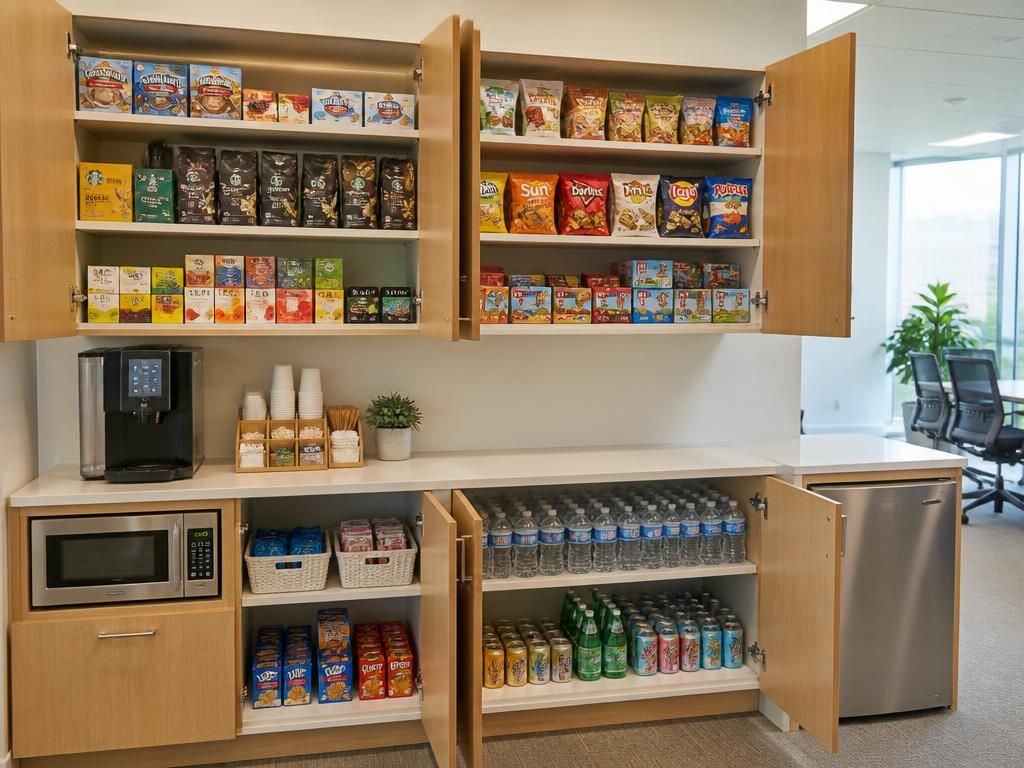
A well-stocked office pantry can make the working day more enjoyable, support employee wellbeing and encourage better eating habits. However, choosing the right snacks for a workplace is not simply about filling shelves with products labelled healthy. The real challenge is finding healthy office snack options that employees genuinely enjoy, consume regularly and look forward to seeing in the pantry.
Many businesses introduce healthier snack policies with good intentions, replacing familiar treats with nuts, fruit bars and wholegrain alternatives. But if employees do not enjoy the new selection, those products remain untouched. Over time, the pantry becomes less appealing, food waste increases and employees start bringing their own snacks or looking elsewhere.
The most effective approach is to create a balanced snack selection that combines everyday favourites with nutritious alternatives. Rather than making the entire pantry healthy overnight, businesses should understand employee preferences, choose practical products and introduce changes gradually.
For companies managing workplace refreshments in Dubai, the right combination of office pantry supplies in Dubai can help create a convenient and welcoming environment where employees have access to snacks that suit different tastes and dietary preferences.
1. Why Healthy Office Snacks Need to Be Appealing
Healthy eating initiatives work best when employees participate willingly. A company can provide nutritious products, but that does not guarantee people will eat them.
Employees have different preferences depending on their age, dietary habits, cultural backgrounds and daily routines. Some prefer savoury snacks, while others reach for something sweet during an afternoon break. Some want a quick source of energy between meetings, while others prefer lighter options alongside their coffee.
A successful workplace snack programme considers these differences.
For example, replacing every biscuit, chocolate bar and savoury snack with plain nuts or unsweetened crackers might appear to be a positive nutritional decision. However, employees who enjoy familiar snacks may find the selection restrictive.
Instead, businesses should focus on making healthier choices accessible without removing everything people already enjoy.
A practical office snack selection should:
-
Include familiar snacks alongside healthier alternatives.
-
Offer sweet and savoury choices.
-
Consider different dietary preferences.
-
Provide convenient, individually portioned products.
-
Include snacks that can be stored safely without complicated handling.
-
Reflect actual employee consumption rather than management assumptions.
The objective is not to force employees into a particular eating pattern. It is to make better choices convenient, enjoyable and easy to incorporate into everyday working routines.
2. Keep the Split Honest: 60% Everyday Favourites and 40% Healthier Lines
One of the most practical ways to manage an office snack selection is to maintain a balance between familiar favourites and healthier products.
A suggested starting point is approximately 60% everyday favourites and 40% healthier snack options.
This ratio is not a strict nutritional guideline. It is a stocking strategy designed to make healthier choices available without making the pantry feel restrictive.
When businesses move too quickly towards an entirely health-focused range, consumption can decline. Employees may simply avoid unfamiliar products, leaving pantry shelves full and increasing unnecessary waste.
A balanced selection provides something for everyone.
Everyday favourites (60%)
These are products employees already recognise and enjoy. Depending on workplace preferences, they might include:
-
Plain biscuits and crackers.
-
Lightly salted savoury snacks.
-
Popcorn.
-
Breakfast bars.
-
Dried fruit and nut combinations.
-
Individually packaged sweet treats.
Healthier alternatives (40%)
These products introduce more nutritious options into the everyday pantry selection:
-
Unsalted or lightly salted mixed nuts.
-
Dried apricots, raisins and dates.
-
Wholegrain crackers.
-
Lower-sugar snack bars.
-
Roasted chickpeas.
-
Portion-controlled trail mixes.
-
Protein bars with suitable nutritional profiles.
The important consideration is that healthier does not automatically mean suitable for everyone. For example, protein bars can contain substantial added sugar, while dried fruit can be high in natural sugars. Checking nutritional labels helps businesses make more informed purchasing decisions.
The 60:40 split should also be adjusted based on actual consumption. A workplace where employees regularly choose healthier products may benefit from increasing that proportion. Another office may need a different balance.
The best pantry ratio is the one that supports employee preferences while reducing waste.
3. Choose Snack Formats That Survive Office Conditions
Selecting the right products is only part of the process. Businesses must also consider how snacks are stored, displayed and consumed throughout the working day.
Office pantries are not always equipped with enough refrigeration space for every food item. Some workplaces have shared refrigerators that are already used for lunches, beverages and personal food storage.
This makes shelf-stable snacks particularly useful.
They are convenient to store, easy to distribute and generally require less daily handling than refrigerated products.
Here are five practical snack categories worth considering.
Nuts and Trail Mixes
Nuts are among the most convenient healthy office snacks because they provide a combination of protein, fibre and healthy fats.
Almonds, walnuts, cashews, pistachios and mixed nuts can be offered in individually portioned packs or small pantry containers.
Trail mixes containing nuts, seeds and dried fruit provide variety without requiring refrigeration.
However, businesses should clearly label products containing peanuts and tree nuts because of allergy concerns. Separate storage and handling arrangements may also be necessary.
Dried Fruits
Dried fruits are convenient alternatives to confectionery and can add natural sweetness to the pantry.
Dates, raisins, dried apricots, figs and cranberries are popular options, particularly in workplaces across the UAE where dates are already a familiar snack.
They are easy to store and do not require refrigeration when kept in suitable sealed packaging.
Individually portioned packs can also help employees manage serving sizes and reduce food waste.
Protein Bars and Snack Bars
Protein bars and oat-based snack bars are useful for employees who need something quick between meetings or during busy working hours.
They are easy to carry, require minimal storage space and are available in different flavours.
Businesses should compare nutritional labels before purchasing. Look at protein content, added sugar, fibre and ingredient lists rather than relying entirely on marketing claims.
Offering a few varieties can help employees find options they genuinely enjoy.
Wholegrain Crackers
Wholegrain crackers provide a savoury alternative to sweet snack bars and biscuits.
They can be stocked in individual packs or larger sealed containers and paired with suitable spreads where refrigeration and food-handling arrangements allow.
Choose products with wholegrain ingredients and compare sodium levels when selecting options.
Their versatility makes them a practical addition to a workplace pantry.
Shelf-Stable Yoghurt Drinks
Certain commercially packaged yoghurt drinks are designed for storage at room temperature before opening.
These can provide variety for employees who prefer a drinkable snack rather than dry food.
However, businesses must check the manufacturer’s storage instructions carefully. Not all yoghurt drinks are shelf-stable, and products requiring refrigeration must be stored at the recommended temperature.
Once opened, they should be handled and refrigerated according to the packaging instructions.
4. Make Healthy Snacks Convenient to Find
Even good snack choices can go unnoticed if pantry shelves are poorly organised.
Employees are more likely to choose products that are visible, accessible and easy to identify. If healthier snacks are hidden behind larger packets of biscuits or stored in an inconvenient location, they may receive less attention.
A simple pantry layout can make a meaningful difference.
Create separate snack sections: Organise the pantry into sweet snacks, savoury snacks, healthier alternatives and beverages. This allows employees to find products quickly.
Place healthier options at eye level: Position nuts, dried fruit, wholegrain crackers and snack bars where employees can easily see them.
Use clear labels: Include product names, ingredients and relevant allergen information. This is especially important for products containing nuts, gluten, dairy or other common allergens.
Offer different portion sizes: Individually packaged snacks can help employees take what they need while keeping shared pantry areas organised.
Keep popular products replenished: Frequently consumed items should not disappear from shelves for long periods. Consistent availability encourages employees to use the pantry regularly.
A well-organised pantry also makes stock monitoring easier for office administrators and facilities teams.
Businesses looking to simplify product selection can explore the range of office pantry items available through Office Pantry UAE.
5. Rotate One or Two Snack Lines at a Time
One of the biggest mistakes businesses make when updating their office pantry is changing the entire snack selection at once.
Although a complete refresh may seem like an easy way to introduce healthier options, it removes the ability to understand which products employees actually prefer.
If every product changes simultaneously, there is no reliable comparison between previous and current consumption patterns.
A better approach is to rotate one or two snack lines each month.
For example, a company might replace one existing sweet snack with a lower-sugar alternative while introducing a new savoury option such as roasted chickpeas.
The remaining products stay unchanged.
This approach makes it easier to monitor employee preferences and identify which new products deserve permanent space in the pantry.
A simple monthly rotation strategy could look like this:
| Month | Snack Change | What to Monitor |
|---|---|---|
| Month 1 | Introduce mixed nuts | Consumption and employee feedback |
| Month 2 | Add dried fruit packs | Repeat usage and popularity |
| Month 3 | Introduce wholegrain crackers | Demand compared with existing savoury snacks |
| Month 4 | Test protein bars | Preferred flavours and remaining stock |
| Month 5 | Introduce roasted chickpeas | Repeat purchases and feedback |
| Month 6 | Review the complete range | Waste, demand and stocking priorities |
The purpose is not to keep changing products for the sake of variety. It is to identify a reliable range that employees enjoy.
Products with consistently low consumption can be replaced, while popular options should remain available.
Over time, this creates a pantry based on actual workplace behaviour rather than assumptions.
6. Use Consumption Data to Reduce Pantry Waste
Healthy pantry planning should also consider how much food is being consumed and how much is being discarded.
A product may appear popular during the first few days after introduction but experience very little demand afterwards. Another snack may be consumed steadily throughout the month.
Without monitoring, businesses can easily overstock products that employees do not particularly enjoy.
A basic consumption tracking system can help.
Record the following information:
-
Product name and category.
-
Quantity delivered.
-
Starting stock.
-
Quantity remaining during each stock check.
-
Reordering frequency.
-
Expiry dates.
-
Employee feedback.
For example, if a business orders 100 packs of mixed nuts and consistently uses 80 to 90 packs each month, it has a reasonable starting point for future orders.
If only 15 packs of a particular protein bar are consumed, the business may need to reduce the next order or test a different flavour.
It is also important to distinguish between slow consumption and poor product quality. Packaging, placement, price, dietary restrictions and awareness can all influence demand.
Regular stock checks help businesses avoid unnecessary purchases and maintain a fresher selection.
7. Consider Dietary Preferences and Workplace Diversity
Dubai workplaces often bring together employees from different nationalities, cultures and dietary backgrounds.
As a result, a single snack selection may not suit everyone.
An inclusive pantry should provide enough variety for employees to make comfortable choices.
Consider including:
Vegetarian options: Nuts, dried fruits, popcorn and suitable wholegrain snacks.
Vegan options: Plant-based snack bars, roasted chickpeas, nuts and dried fruit without animal-derived ingredients.
Gluten-free options: Clearly labelled gluten-free crackers, selected nut products and suitable snack bars.
Lower-sugar options: Unsweetened nuts, plain seeds and selected low-added-sugar products.
Dairy-free alternatives: Suitable plant-based snack products and dairy-free packaged bars.
Allergen information should always be checked before purchasing. Businesses should avoid assuming that a product is allergen-free simply because it appears healthy.
Offering different choices helps employees feel considered without making the pantry unnecessarily complicated.
8. Pair Healthy Snacks with Better Office Beverage Options
A good snack programme should not operate independently of the office beverage setup.
Employees often enjoy snacks alongside coffee, tea or other refreshments, particularly during morning breaks and afternoon working hours.
Providing a variety of beverages alongside healthy snacks makes the pantry more useful throughout the day.
For example, nuts and wholegrain crackers can be offered alongside unsweetened tea, while employees looking for a quick morning snack might prefer a protein bar with their coffee.
Businesses can also improve the overall pantry experience by providing convenient coffee-making facilities.
Explore office coffee machine Dubai solutions to create a more complete workplace refreshment area.
The goal is to make everyday breaks convenient without relying entirely on sugary drinks or highly processed snacks.
A thoughtfully stocked pantry can support a more balanced refreshment routine while giving employees the flexibility to choose what suits them.
9. Make Pantry Restocking Part of the Strategy
Even the best snack selection will fail if popular products regularly run out or less popular items remain on the shelves beyond their intended stocking period.
Consistent replenishment is essential for maintaining an appealing workplace pantry.
Businesses should establish a restocking routine based on actual consumption, employee numbers and storage capacity.
For example, a small office may only require weekly stock checks, while a larger workplace with frequent pantry usage may benefit from more regular monitoring.
A practical restocking process should include:
-
Checking current stock levels.
-
Identifying products approaching their expiry dates.
-
Recording frequently consumed items.
-
Removing damaged or expired products.
-
Reordering based on actual demand.
-
Organising deliveries and shelf replenishment.
This is where structured pantry restocking becomes valuable.
Rather than ordering the same quantities every month, businesses can adjust their requirements based on consumption patterns.
For organisations that prefer a more organised approach, managed pantry services can help simplify product sourcing, stock monitoring and ongoing pantry replenishment.
This allows office administrators to spend less time managing individual snack orders and more time focusing on workplace operations.
10. Build a Pantry That Employees Want to Use
A successful healthy office snack programme is not measured by the number of nutritious products purchased. It is measured by how consistently employees use the pantry and whether the selection continues to meet their expectations.
Businesses should avoid treating healthier snacks as a replacement for everything employees already enjoy.
Instead, the focus should be on gradually improving the available choices.
Start with a balanced selection, introduce practical shelf-stable formats, monitor consumption and rotate a small number of products each month.
Collecting occasional employee feedback can also help identify missing snack categories, preferred flavours and products that deserve more shelf space.
For companies in Dubai, having a reliable source of workplace refreshments makes this process easier.
Office Pantry UAE provides office pantry supplies in Dubai, helping businesses source the everyday products needed to maintain convenient and well-stocked workplace pantries.
Whether you are updating an existing snack selection or organising a complete office refreshment setup, choosing the right products and maintaining a consistent replenishment routine can make a noticeable difference.
Conclusion: Healthy Snacks Work When Employees Enjoy Them
Healthy office snacking does not need to involve strict rules or an entirely different pantry.
The most effective approach is to combine familiar favourites with nutritious alternatives, prioritise products that suit office storage conditions and introduce changes gradually.
A 60:40 starting split between everyday favourites and healthier options can provide a useful balance. From there, businesses should monitor consumption, listen to employee feedback and rotate one or two products at a time.
Ultimately, the best healthy office snack options are not simply the ones that look good on a purchasing list. They are the products employees reach for every day.
With thoughtful selection, organised storage and dependable pantry restocking, businesses can create a workplace pantry that supports employee satisfaction, reduces food waste and makes everyday office breaks more enjoyable.
Looking to improve your workplace pantry? Explore Office Pantry UAE for convenient office pantry supplies in Dubai and solutions to help keep your workplace refreshments organised and well-stocked.
FAQs
1. What are the best healthy snacks for an office pantry?
Some popular healthy office snacks include mixed nuts, dried fruits, wholegrain crackers, roasted chickpeas, protein bars and suitable low-sugar snack options.
2. How do you encourage employees to eat healthier snacks?
Offer healthier alternatives alongside familiar favourites, place them in visible locations and introduce new products gradually based on employee feedback.
3. What is a good ratio of healthy snacks to regular office snacks?
A practical starting point is 40% healthier snack options and 60% everyday favourites. Businesses can adjust this ratio according to employee preferences and consumption.
4. Which healthy snacks do not require refrigeration?
Mixed nuts, dried fruits, wholegrain crackers, roasted chickpeas and many commercially packaged snack bars can be stored without refrigeration when their packaging instructions permit it.
5. Are protein bars good for office snacks?
Protein bars can be convenient workplace snacks. Choose products based on their protein, fibre, added sugar and overall nutritional content.
6. How often should office pantry snacks be replenished?
Office pantry snacks should be replenished according to consumption, employee numbers and storage capacity. Weekly or monthly checks can help businesses maintain suitable stock levels.
7. How can businesses reduce food waste in office pantries?
Monitor product consumption, purchase suitable quantities, check expiry dates and introduce new snacks gradually instead of replacing the entire selection.
8. What healthy snacks are suitable for diverse workplaces in Dubai?
Mixed nuts, dried fruits, vegan snack bars, gluten-free crackers and roasted chickpeas offer variety. Businesses should clearly label allergens and dietary information.
9. Why are shelf-stable snacks useful for office pantries?
Shelf-stable snacks require less refrigeration space, are convenient to store and can be distributed easily throughout the workplace.
10. Where can businesses buy office pantry supplies in Dubai?
Businesses can source workplace refreshments and pantry essentials through Office Pantry UAE, which offers office pantry supplies and pantry management solutions in Dubai.