The Complete Office Pantry Checklist for Dubai Offices
Most pantry problems in Dubai offices are not budget problems — they are list problems. Without a defined range and par levels, teams over-order what nobody uses and run out of the three items everyon...
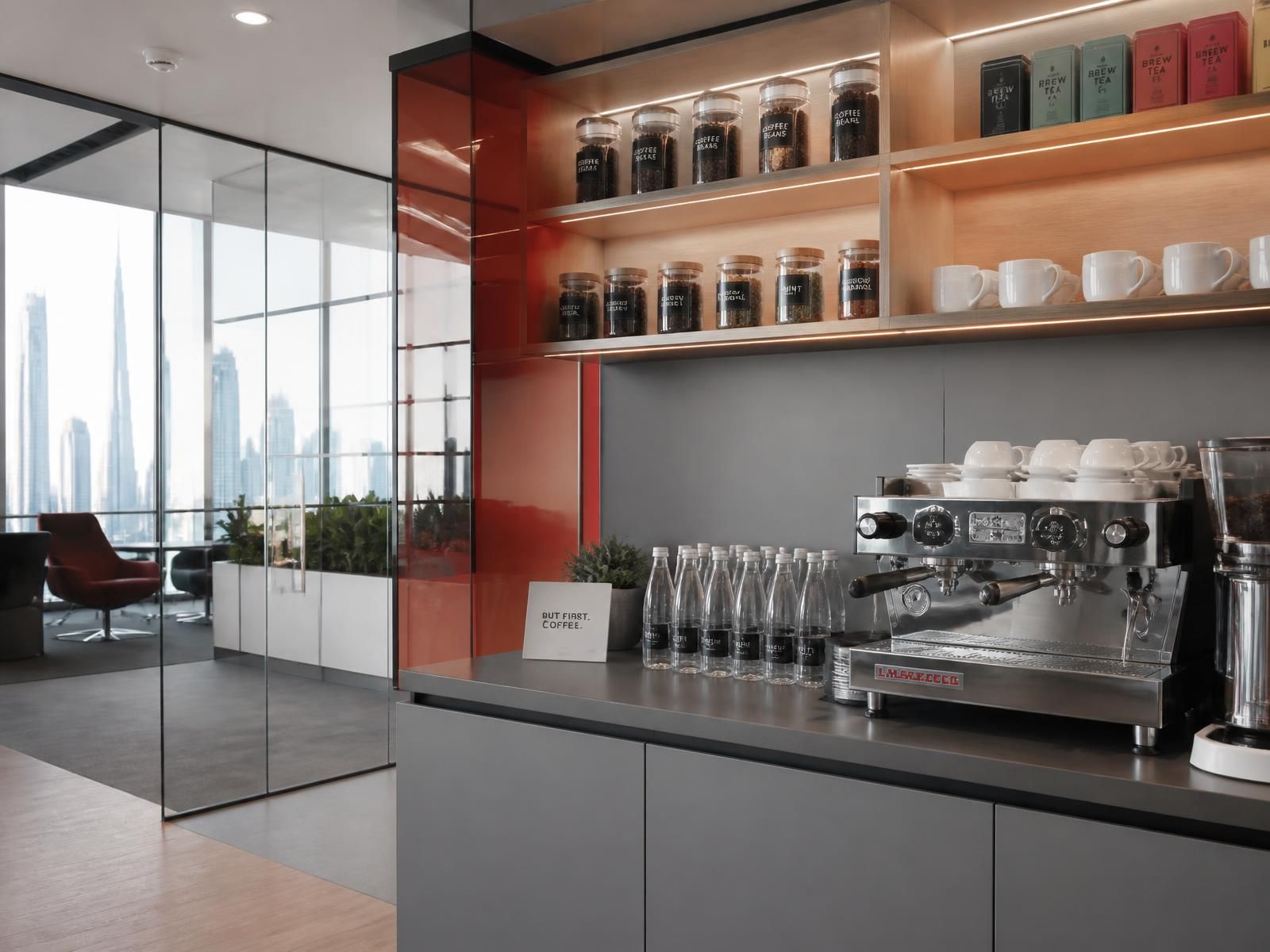
Most pantry problems in Dubai offices are not budget problems — they are list problems.
Without a defined range, clear quantities and practical par levels, offices often over-order products nobody uses while running out of the three things everyone needs before 10am: coffee, water and milk.
A well-managed office pantry should be predictable. Employees should find the essentials available every working day, facilities teams should know when stock needs replenishing, and businesses should avoid unnecessary wastage caused by excessive ordering.
Whether you manage a small Dubai office, a growing corporate workplace, a coworking space or a large UAE business, a structured office pantry checklist makes purchasing and replenishment much easier.
The objective is simple: keep the right products available, maintain sensible stock levels and adjust purchasing according to actual consumption.
What Should an Office Pantry Include?
A complete office pantry generally covers five areas: beverages, dairy and sweeteners, drinking water, snacks, and cleaning and hygiene supplies.
| Pantry Category | Typical Items | Priority |
|---|---|---|
| Coffee & Tea | Coffee beans, capsules, ground coffee, tea bags | Very High |
| Dairy & Sweeteners | Fresh milk, UHT milk, creamers, sugar | Very High |
| Water & Drinks | Bottled water, dispenser refills, juices | Very High |
| Snacks | Biscuits, nuts, crackers, healthier snacks | Medium |
| Cleaning & Hygiene | Dishwashing liquid, soap, tissues, paper towels, bin liners | Very High |
The exact range depends on the number of employees, working hours, visitor traffic, pantry equipment and consumption habits.
For most offices, a smaller selection of frequently used products is more practical than a large range that creates unnecessary inventory and wastage.
Start With the Daily Essentials
The first part of your checklist should focus on products employees use every working day. These deserve the highest par levels because running out of them is immediately noticeable.
Coffee and Tea
Coffee is often one of the most frequently consumed products in a workplace. The right coffee format depends on the equipment installed in the pantry.
An office may use coffee beans, ground coffee, capsules, pods or instant coffee. Your purchasing list should therefore match the coffee supply to the machine rather than buying products simply because they are popular.
For offices with a dedicated machine, it is also useful to maintain a small reserve of coffee-machine cleaning and maintenance products.
Tea can remain relatively simple. Black tea, green tea and one or two herbal options will usually provide enough variety for a standard workplace. Additional varieties can be introduced when actual employee demand justifies them.
For businesses reviewing their workplace beverage requirements, OfficePantry.ae’s coffee solutions can be included as an internal resource when discussing coffee machine Dubai requirements.
Milk, Creamers and Sugar
Coffee and tea supplies are incomplete without the products employees use alongside them.
Fresh milk is useful for everyday consumption but needs closer stock monitoring because of its shorter shelf life. UHT milk provides a convenient backup option because it can be stored for longer periods.
Sugar, brown sugar, creamers and alternative sweeteners can be stocked according to employee preferences. Monitoring actual usage is important here because some offices may consume considerably more milk than sugar, while others may have the opposite pattern.
Drinking Water
Water should have one of the highest stock priorities in any Dubai workplace.
The supply method can vary from bottled drinking water to dispenser systems and refillable containers. Whatever system is used, the important consideration is maintaining enough stock to cover normal consumption, meetings, visitors and unexpected delivery delays.
For planning purposes, 1.5 litres of water per person per working day can be used as an initial assumption. Actual consumption should then be measured and adjusted.
Cups, Stirrers, Napkins and Tissue
Small consumables can easily be overlooked because they are inexpensive. However, their operational importance is high.
An office can have plenty of coffee and water but still have a pantry problem if there are no cups, stirrers or napkins.
These items should therefore be included in the same inventory system as coffee and water.
Add a Controlled Weekly Snack Range
Snacks normally require less frequent replenishment than coffee, milk and water. However, they can quickly become a source of unnecessary spending if the range becomes too large.
A practical starting point is around six to ten snack lines. This could include everyday biscuits, crackers, nuts, healthier snacks and one or two rotating products.
| Snack Type | Examples | Review Frequency |
|---|---|---|
| Biscuits | Digestive, cream biscuits | Weekly |
| Nuts | Almonds, cashews, mixed nuts | Weekly |
| Healthier Options | Granola bars, dried fruit | Weekly |
| Savoury | Crackers, pretzels | Weekly |
| Sweet Options | Chocolate, confectionery | Weekly |
| Fresh Options | Apples, bananas, seasonal fruit | 1–3 times weekly |
There is no need to change the entire range every month. A better approach is to monitor consumption and replace one or two slow-moving products periodically.
This keeps the pantry interesting without turning it into an oversized convenience store.
Do Not Forget the Invisible Pantry List
Some of the most important office pantry items are the products nobody thinks about until they run out.
Cleaning and hygiene supplies should be included in the same managed inventory as coffee, tea and snacks.
Dishwashing liquid, sponges, surface cleaner, hand soap, paper towels, tissues and bin liners may not be consumed as visibly as coffee, but running out of them can create an immediate hygiene issue.
A simple inventory principle works well:
If running out of a product creates a hygiene or operational problem, give that product a minimum stock level.
This also prevents the common situation where a pantry appears fully stocked but the cleaning cupboard is empty.
Set Par Levels According to Headcount
Headcount is one of the simplest ways to create an initial pantry purchasing model.
A useful starting point is two cups of coffee, 1.5 litres of water and one snack unit per person per working day.
These numbers should not be treated as universal consumption standards. They are starting assumptions that should be refined after collecting actual office data.
For example, consider a 50-person office:
| Item | Daily Starting Allowance | 5 Working Days | With 20% Buffer |
|---|---|---|---|
| Coffee | 100 servings | 500 | 600 |
| Water | 75 litres | 375 litres | 450 litres |
| Snacks | 50 units | 250 | 300 |
The buffer accounts for visitors, meetings, unusual consumption and delivery delays.
After the first month, actual consumption should replace assumptions wherever possible.
How to Calculate Your Pantry Par Level
A par level is the amount of stock an office aims to maintain for a defined replenishment period.
A simple formula is:
Par Level = Average Daily Consumption × Restock Period + Safety Buffer
Suppose an office consumes 100 coffee servings per day and receives a delivery every five working days.
100 × 5 = 500 servings.
Adding a 20% safety buffer gives:
500 × 1.20 = 600 servings
The starting par level would therefore be approximately 600 servings.
The same principle can be applied to milk, bottled water, cups, napkins, snacks and cleaning supplies.
As the business gathers more consumption data, the par levels can become increasingly accurate.
Use Consumption Data Instead of Guesswork
One of the biggest improvements an office can make is moving from estimated purchasing to consumption-based purchasing.
For example, an illustrative office consumption pattern could look like this:
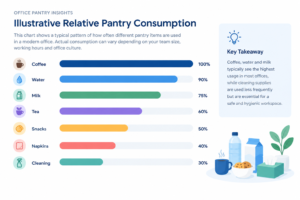
This is not a universal Dubai office benchmark. Every workplace has different consumption patterns.
The purpose of tracking is to identify which products move quickly, which products remain untouched and where the business is carrying unnecessary stock.
A simple monthly spreadsheet can record opening stock, purchases, closing stock and estimated consumption.
Create a Daily, Weekly and Monthly System
A good checklist becomes much more effective when it is connected to a regular checking schedule.
Daily checks should focus on coffee, tea, milk, water, cups, tissues, napkins and general pantry cleanliness.
Weekly checks can cover snacks, soft drinks, backup beverage supplies, cleaning products and expiry dates.
Monthly reviews should look beyond individual products. Compare consumption with previous months, identify slow-moving items, review wastage, check delivery frequency and adjust par levels.
This creates a cycle:
Check → Record → Replenish → Review → Adjust
Over time, this system makes pantry purchasing more predictable.
Keep Expiry Dates Under Control
A pantry checklist should answer two questions:
What do we need to buy?
and
What do we already have?
Using a first-in, first-out approach can help reduce unnecessary wastage. Older suitable stock should generally be used before newer stock.
Fresh milk, snacks, biscuits, nuts, chocolate and other perishable or date-sensitive products deserve particular attention.
Buying large quantities simply because a product has a lower unit price can also be counterproductive. If the product expires before employees consume it, the apparent saving becomes waste.
Consider the Realities of Dubai Offices
Planning office pantry supplies Dubai businesses need is not simply a matter of multiplying headcount by a fixed quantity.
A 30-person office with frequent client meetings may consume more coffee and water than a 50-person workplace with few visitors.
Working patterns also matter. Hybrid offices may have significant differences between Monday and Friday consumption. Offices operating longer shifts may require higher beverage levels. Meeting rooms can also create additional demand for water, coffee, cups and snacks.
Storage capacity is another consideration. A pantry with limited cabinet or refrigerator space should not maintain the same stock strategy as a large corporate facility with dedicated storage.
The best checklist therefore combines headcount, consumption, storage capacity and replenishment frequency.
When Does Managed Pantry Service Make Sense?
As an office grows, pantry management can become another administrative responsibility.
Someone needs to monitor inventory, prepare orders, coordinate deliveries, check expiry dates, maintain storage areas and respond to shortages.
For businesses that want to reduce this workload, a managed pantry Dubai service can provide a more structured approach.
Managed pantry solutions can combine product supply, inventory monitoring, regular pantry restocking, beverage solutions and ongoing pantry management.
Instead of waiting for someone to report that coffee or water has run out, replenishment can be planned around agreed stock levels and actual consumption.
Businesses looking for a more structured approach can explore managed pantry services in Dubai and pantry restocking solutions.
The Complete Office Pantry Checklist
The following master checklist can be used as a starting point and customised according to office size and consumption.
| Category | Items to Review |
|---|---|
| Coffee | Beans, ground coffee, capsules, decaf, machine supplies |
| Tea | Black tea, green tea, herbal tea |
| Dairy | Fresh milk, UHT milk, creamers |
| Sweeteners | White sugar, brown sugar, alternative sweeteners |
| Water | Bottled water, dispenser refills, drinking glasses |
| Disposables | Cups, stirrers, napkins, tissues |
| Snacks | Biscuits, nuts, crackers, healthy snacks |
| Drinks | Juice, soft drinks and other beverages |
| Cleaning | Dishwashing liquid, sponges, surface cleaner |
| Hygiene | Hand soap, paper towels, tissues |
| Waste | Bin liners and waste bags |
| Stock Control | Par levels, expiry dates and consumption records |
Businesses can also review the available range of office pantry items when building their workplace inventory.
Final Thoughts
A successful office pantry does not need hundreds of products. It needs a defined range, sensible quantities and reliable replenishment.
Start with the daily essentials: coffee, tea, milk, water, cups and tissues. Add a controlled snack selection and make cleaning and hygiene products part of the same inventory system.
Then introduce par levels based on headcount and, more importantly, refine them using actual consumption data.
For businesses looking for reliable office pantry supplies Dubai solutions, a structured pantry system can reduce shortages, improve employee convenience and help control unnecessary stock.
From everyday office pantry items to coffee solutions and scheduled pantry restocking, OfficePantry.ae can help businesses create a more consistent workplace pantry experience across Dubai and the UAE.
Frequently Asked Questions About Office Pantry Supplies
1. What should be included in an office pantry?
An office pantry should generally include coffee, tea, milk, sugar, drinking water, cups, stirrers, napkins, snacks and basic cleaning and hygiene supplies. The exact range should depend on office size and employee consumption.
2. How much water should an office stock per employee?
A useful starting point is 1.5 litres of water per person per working day. Offices should adjust this figure based on actual consumption, climate-related needs, visitors and working patterns.
3. How much coffee does an office need?
A practical starting assumption is two cups of coffee per employee per working day. Actual coffee consumption should be tracked for several weeks before establishing a permanent par level.
4. What are the most important office pantry supplies?
The highest-priority supplies are usually drinking water, coffee, tea, milk, cups, sugar and basic hygiene products. These items should generally have higher minimum stock levels because they are used frequently.
5. How do you calculate office pantry stock levels?
A simple formula is: Average Daily Consumption × Restock Period + Safety Buffer. A 10–20% buffer can be used as a starting point and adjusted according to actual consumption and delivery reliability.
6. How often should an office pantry be restocked?
Frequently used products such as water, coffee and milk may need daily or several-times-weekly monitoring, while snacks and cleaning supplies can usually be reviewed weekly. The ideal pantry restocking frequency depends on consumption and storage capacity.
7. What snacks should an office pantry have?
A practical office pantry can offer a small selection of biscuits, crackers, nuts, healthier snacks and occasional rotating products. Six to ten snack lines can provide variety without creating excessive inventory.
8. How can offices reduce pantry waste?
Offices can reduce waste by tracking consumption, setting par levels, reviewing slow-moving products, monitoring expiry dates and avoiding excessive bulk purchases. Actual consumption data should guide future orders.
9. What is a managed pantry service in Dubai?
A managed pantry service in Dubai helps businesses manage workplace pantry requirements through services such as product supply, inventory monitoring, scheduled restocking and pantry management. It can reduce the administrative work involved in maintaining pantry supplies.
10. Where can businesses buy office pantry supplies in the UAE?
Businesses can source office pantry supplies in the UAE through specialist workplace pantry suppliers that provide products such as beverages, snacks, consumables and cleaning supplies. OfficePantry.ae provides office pantry products and related pantry solutions for businesses.