How Managed Pantry Restocking Actually Works
Managing an office pantry involves more than ordering coffee, tea, snacks and drinking water. Someone needs to check existing stock, identify what is running low, monitor expiry dates, coordinate deliveries and ensure everything is organised when supplies arrive. Without a structured process, offices can end up with excess stock of unpopular products while running out of everyday essentials.

Managing an office pantry involves more than ordering coffee, tea, snacks and drinking water. Someone needs to check existing stock, identify what is running low, monitor expiry dates, coordinate deliveries and ensure everything is organised when supplies arrive. Without a structured process, offices can end up with excess stock of unpopular products while running out of everyday essentials.
This is where managed pantry restocking makes a difference.
Unlike a standard delivery subscription that sends the same products at predetermined intervals, managed restocking is a recurring service built around your office’s actual requirements. The process involves checking existing inventory, preparing a proposed restock list, obtaining approval and replenishing the pantry according to agreed quantities.
For businesses looking for Managed Pantry Dubai solutions, this approach offers a more organised way to manage workplace supplies while maintaining better visibility over purchasing and consumption.
In this guide, we explain how managed pantry restocking works, what happens during each visit and how Pantry Management Services UAE businesses can use help simplify everyday pantry operations.
What Is Managed Pantry Restocking?
Managed pantry restocking is a structured service in which pantry supplies are replenished according to actual stock levels, employee consumption and agreed inventory requirements.
Instead of simply placing an order whenever coffee or water runs out, businesses follow a recurring process. A service team visits the workplace, checks the pantry, identifies replenishment requirements and prepares a proposed order for approval. Once approved, the required products are delivered and organised on the shelves.
The key difference is that restocking decisions are based on what the office needs, not just on a fixed delivery schedule.
For example, an office might consume coffee quickly but use very few biscuits. A standard subscription could deliver equal quantities every week regardless of demand. A managed service can recommend more coffee and fewer biscuits based on the current stock and consumption pattern.
This makes the process more flexible for businesses of different sizes, from small offices to large corporate workplaces.
How Managed Pantry Restocking Works: A Step-by-Step Process
A managed pantry service generally follows four main stages: scheduled visits, physical stock checks, order approval and organised replenishment.
1. We Visit Your Office on a Fixed Schedule
The process begins by agreeing on a replenishment schedule that suits your office.
Depending on consumption, storage capacity and the number of employees, visits may be weekly, fortnightly or monthly. A busy office with frequent meetings may need more frequent visits than a smaller workplace with limited pantry usage.
The schedule provides predictability. Office managers know when the pantry will be checked, when proposed orders will be prepared and when approved supplies are expected to arrive.
Importantly, the interval should reflect actual consumption rather than forcing every business into the same plan.
For example, an office with 100 employees may require weekly monitoring of coffee, milk and water, while certain cleaning supplies and slow-moving products may only need replenishment once a month.
2. We Check Every Shelf and Review Current Stock
Before recommending additional products, the service team checks what is already available.
This physical inventory check is an important part of managed restocking because ordering without checking existing stock can lead to unnecessary purchases.
The team compares available quantities against agreed par levels, which are the target stock levels established for individual products. Fast-moving items are identified, slow-moving products are reviewed and products approaching their expiry dates can be flagged.
Coffee-machine consumables and other equipment-related supplies may also be checked where they form part of the agreed service.
Consider the following example:
| Pantry Item | Current Stock | Target Stock | Proposed Action |
|---|---|---|---|
| Coffee capsules | 2 boxes | 6 boxes | Add 4 boxes |
| Tea bags | 4 boxes | 5 boxes | Add 1 box |
| Bottled water | 3 packs | 10 packs | Add 7 packs |
| Biscuits | 8 packs | 5 packs | No restock needed |
| Paper towels | 1 pack | 4 packs | Add 3 packs |
These quantities are illustrative. Actual recommendations depend on the office’s agreed stock levels, consumption and delivery schedule.
The benefit is straightforward: the proposed order reflects the gap between current inventory and required inventory rather than repeating a previous order without checking.
3. You Approve the Restock List Before Delivery
Once the stock check is complete, the next step is to prepare a proposed pantry restocking list.
The list should identify the products required, recommended quantities and applicable pricing. The office manager or authorised contact can then review the order before it is processed.
If the office has enough of a particular product, that item can be removed. If employee preferences have changed, quantities can be adjusted. New requests can also be included where available.
No delivery should proceed until the customer has approved the proposed order, in accordance with the agreed service process.
This approval stage is particularly valuable for businesses that need to monitor pantry expenditure. It creates a clear connection between the stock available, the products requested and the amount approved for replenishment.
For finance teams, it also provides a practical opportunity to review purchasing before additional supplies are ordered.
4. We Deliver, Restock and Organise the Pantry
After approval, the next stage is delivery and shelf organisation.
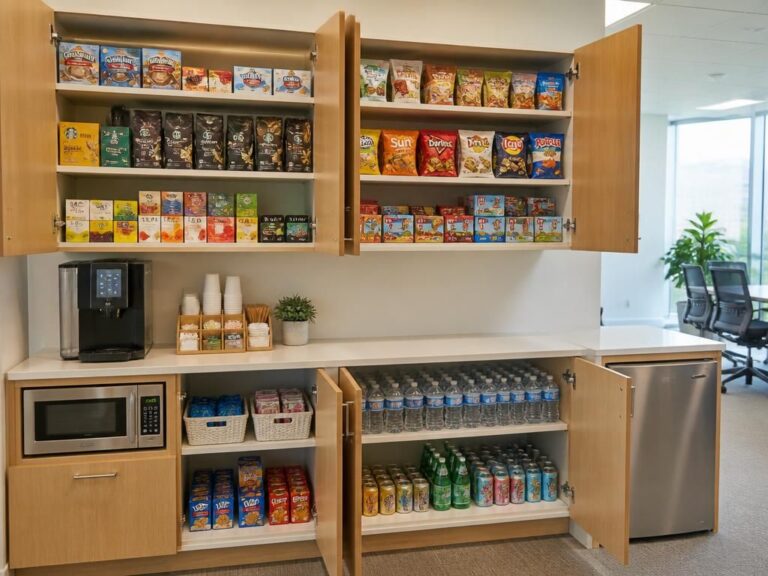
The team brings the approved supplies to the office, places products in their assigned storage areas and rotates suitable older stock to the front so it can be used first. Packaging is removed where appropriate, and the pantry is left organised according to the agreed arrangement.
Products that require refrigeration should be stored correctly, and cleaning materials should be kept separate from food and beverage supplies.
The objective is to leave the pantry ready for employees to use rather than leaving boxes for the office manager to unpack and organise.
This final step turns pantry restocking from a purchasing task into a more complete workplace service.
Managed Restocking vs Standard Pantry Delivery
Not every pantry supply service works in the same way. Understanding the difference helps businesses choose the approach that fits their needs.
| Service Feature | Standard Delivery | Managed Pantry Restocking |
|---|---|---|
| Stock inspection | Usually handled by the customer | Physical checks included where agreed |
| Order quantities | Customer places an order | Proposed using current stock and agreed levels |
| Customer approval | Depends on the ordering process | Approval before delivery under the described model |
| Expiry monitoring | Usually handled by the customer | Can be included in the stock-check process |
| Shelf organisation | Depends on the delivery service | Restocking and organisation included where agreed |
| Spending visibility | Based on individual orders | Supported by proposed orders and approval |
| Replenishment schedule | Based on order placement or subscription | Planned around consumption and agreed visits |
The precise scope depends on the provider and service agreement. Businesses should confirm whether physical stock checks, shelf organisation, packaging removal and expiry monitoring are included.
Why Par Levels Matter in Office Pantry Management
A par level is the target quantity of a particular product that an office aims to maintain.
Without par levels, pantry ordering often depends on memory or last-minute requests. This can result in inconsistent stock levels, unnecessary purchases and repeated shortages.
A managed pantry system establishes a target for each important product and uses the physical stock check to determine what needs replenishing.
A simple calculation is:
Recommended Replenishment = Target Stock Level − Current Stock
For instance, if the agreed target for coffee is six boxes and two boxes remain, the initial replenishment requirement is four boxes.
In practice, the final recommendation may also consider upcoming meetings, holidays, expected consumption and delivery lead times.
Par levels should not remain fixed forever. After collecting several weeks of consumption data, the business can adjust targets to reflect real demand.
How Managed Pantry Restocking Helps Control Costs
Effective pantry management is not simply about spending less on every order. It is about reducing avoidable purchases while ensuring essential products remain available.
Physical stock checks help prevent duplicate ordering. Consumption reviews highlight products that are purchased regularly but rarely used. Approval before delivery gives office managers a chance to adjust quantities before expenditure is committed.
For example, if biscuits regularly remain in stock while coffee capsules run out, the restocking plan can shift purchasing towards coffee and reduce the biscuit order.
Businesses can also use monthly reviews to compare purchasing against consumption, identify expiry-related waste and assess whether the current replenishment frequency is appropriate.
The results depend on the quality of inventory records and the consistency of the process, but a structured approach makes pantry spending easier to understand and manage.
Who Benefits From Managed Pantry Services in Dubai?
Managed pantry services can be useful for a wide range of workplaces.
Small and medium-sized businesses benefit when office managers have limited time to handle purchasing and inventory. Larger corporate offices may need a more consistent process for maintaining supplies across busy departments or multiple pantry areas.
Coworking spaces, client-facing offices and businesses with frequent meetings may also benefit from planned replenishment because consumption can change significantly from one week to another.
For companies with growing teams, managed restocking can help establish a repeatable process instead of relying on employees to report shortages individually.
Businesses looking for Pantry Management Services UAE providers should consider the service frequency, product range, approval process, delivery arrangements and level of inventory management offered.
What Should You Look for in a Managed Pantry Provider?
A suitable provider should offer a clear and transparent process rather than simply promising regular deliveries.
Start by checking whether the service includes physical stock inspections and whether proposed orders are shared for approval. Confirm how frequently visits take place, how products are selected and whether quantities can be changed before delivery.
It is also worth asking how the provider handles expiry dates, product substitutions, urgent replenishment requests and changes in employee headcount.
Finally, clarify which activities are included in the service and which may incur additional charges. A clearly defined agreement helps both the business and the provider understand their responsibilities.
For companies comparing office pantry supplies Dubai options, the quality of the management process can be just as important as the products available.
Simplify Your Office Pantry With OfficePantry.ae
A well-managed pantry should not require office managers to spend every week counting products, preparing emergency orders and organising deliveries.
The process becomes more predictable when stock is checked on a schedule, replenishment quantities are based on actual requirements, orders are approved before delivery and products are organised when they arrive.
OfficePantry.ae provides a relevant starting point for businesses exploring office pantry supplies and pantry management options across Dubai and the UAE.
Learn more about managed pantry services, explore pantry restocking solutions or browse available office pantry items to understand the products and services suited to your workplace.
For a tailored discussion about your office’s pantry requirements, visit the OfficePantry.ae contact page.
The goal is simple: a well-stocked pantry, fewer last-minute orders and a purchasing process your team can plan around.
Frequently Asked Questions About Managed Pantry Restocking
1. What is managed pantry restocking?
Managed pantry restocking is a recurring service that checks existing pantry stock, identifies replenishment needs, obtains customer approval and delivers and organises the approved supplies.
2. How does managed pantry restocking work?
The process typically involves scheduled visits, physical stock checks, a proposed restock list for approval, and delivery and shelf organisation after approval.
3. Is managed pantry restocking the same as a delivery subscription?
No. A delivery subscription generally follows predetermined orders or intervals, while managed restocking uses current stock levels and agreed requirements to recommend quantities.
4. How often should an office pantry be restocked?
Office pantries may be restocked weekly, fortnightly or monthly, depending on employee numbers, consumption, storage capacity and delivery requirements.
5. Does the customer approve the pantry restocking order?
In an approval-based managed restocking model, the customer reviews the proposed products, quantities and pricing before delivery proceeds.
6. What are par levels in pantry management?
Par levels are target stock quantities for individual products. They help determine when items need replenishing and how much stock an office should maintain.
7. Can managed pantry services help control office expenses?
Yes. Stock checks, consumption tracking and order approval can help reduce duplicate purchases, unnecessary inventory and waste from products that are rarely used.
8. What is included in pantry management services in the UAE?
Depending on the provider, services may include inventory checks, restocking recommendations, product supply, scheduled deliveries, shelf organisation and expiry monitoring.
9. Who needs managed pantry services in Dubai?
Corporate offices, SMEs, coworking spaces and other workplaces can benefit when they want more organised pantry supplies, predictable replenishment and less administrative work.
10. How can I arrange managed pantry restocking in Dubai?
Contact an office pantry provider such as OfficePantry.ae to discuss your headcount, product requirements, consumption patterns and preferred restocking schedule.